Party Bus Rental Service in Dallas: Ride Together in Style
Party bus rental service in Dallas keeps your group together.…

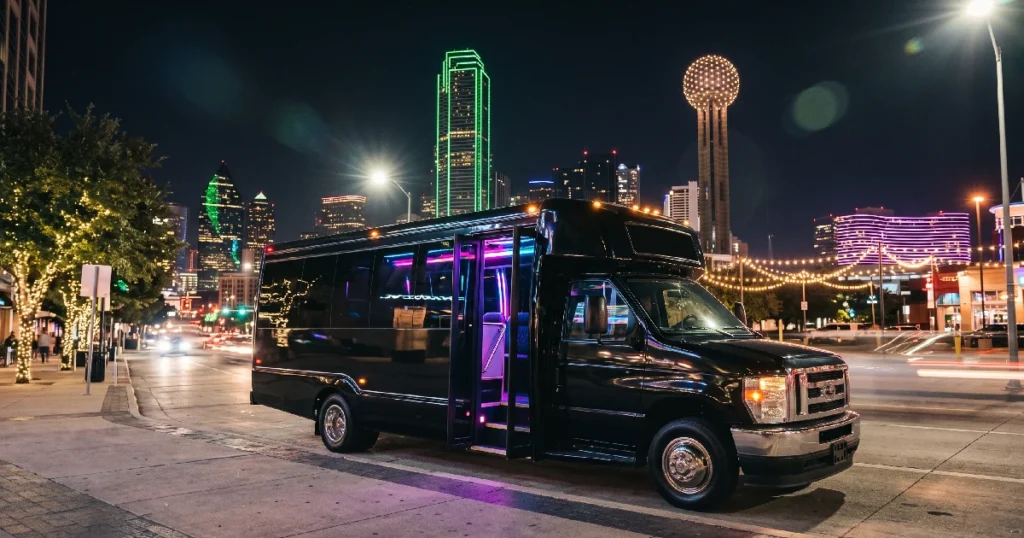
Party bus rental service in Dallas keeps your group together.…

Are you Planning to attend the 2027 PGA Championship in…

The process of planning an event and ensuring that everyone…

Dallas Limo and Black Car Service provides private aviation transportation…
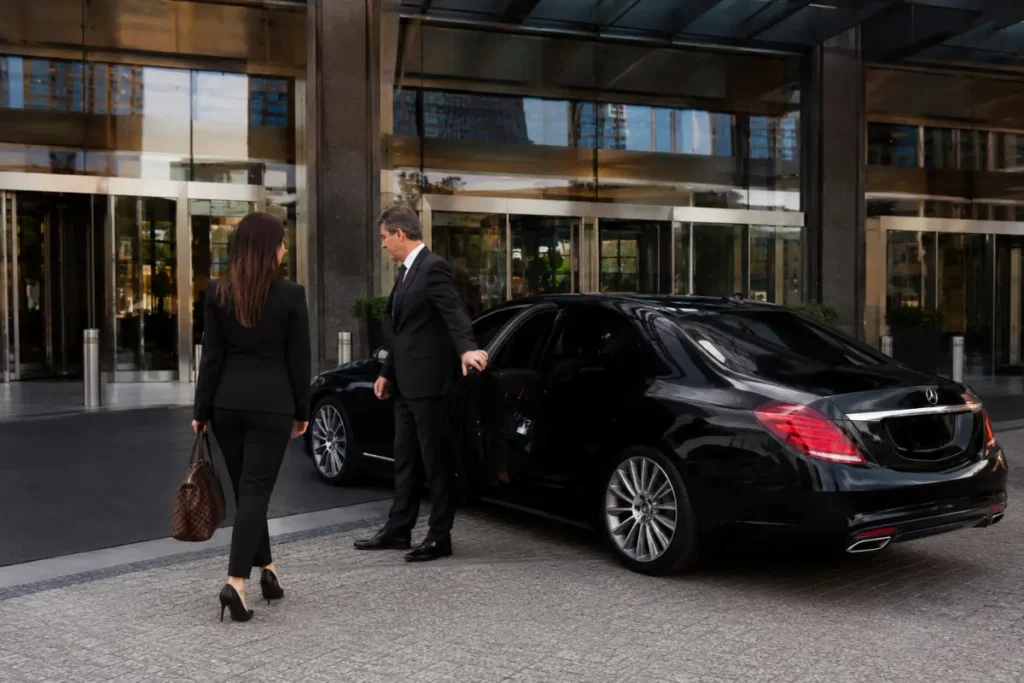
| Quick answer: Hourly car service in Dallas is an as-directed chauffeur booking. You reserve a vehicle and chauffeur by the hour. The car stays with you all day. You can add stops, change the order, or run late. Typical Dallas rates run $95 to $140 per hour for an executive sedan and $125 to $185 per hour for a luxury SUV, with a 3-hour minimum. |
Most business days in Dallas do not go in a straight line. You start downtown. Your second meeting moves to Irving. Lunch gets pushed. Someone added a site visit in Plano. Then you need DFW by 5:30 sharp.
Point-to-point transfers break under that kind of day. Every change means a new booking. Every booking means a new driver. And every driver needs the address explained again.
Hourly car service solves it differently. One chauffeur. One vehicle. One invoice at the end. This guide covers exactly how it works in the DFW Metroplex, what you should pay, and how to plan the day so nothing slips.
Hourly car service is a chauffeur and vehicle reserved for a block of time. The industry also calls it as-directed service or directed hourly. Some travel managers just say the car is “at your disposal.” You are not buying a trip. You are buying availability.
That difference matters more than people expect. With a point-to-point transfer, you pay for a route. Origin, destination, done. Hourly, the chauffeur stays assigned to you. Stops can change mid-day. Order can flip. Nobody re-books anything.
Note the word chauffeur, not driver. It is a real distinction in this industry. A chauffeur is commercially licensed, background-checked, and trained on client protocol. They open doors, handle bags, and stay quiet when you are on a call.
Different buyers ask for this in different words. All of these describe hourly booking:
Choose point-to-point for one or two stops with fixed timing. Choose hourly when you have three or more stops, uncertain meeting lengths, cargo to keep secured, or a team traveling together. Three stops is the practical tipping point in Dallas. Here is the honest comparison. Point-to-point is cheaper on paper. Hourly is cheaper once your schedule moves.
| Factor | Point-to-point transfer | Hourly car service |
| Billing basis | Per trip, fixed route | Per hour, garage-to-garage |
| Best for | 1 to 2 stops, known timing | 3+ stops, flexible timing |
| Schedule changes | New booking each time | Adjusted on the spot |
| Chauffeur | Different one per trip | Same one all day |
| Belongings in vehicle | Must carry with you | Stay locked in the car |
| Meeting runs 45 min over | Rebook, plus a wait charge | No action needed |
| Expense reporting | Five separate receipts | One invoice |
| Typical Dallas cost | $75 to $130 per leg | $95 to $185 per hour |
Notice the last two rows. Finance teams care about them more than travelers do. One invoice per day is far easier to code than eight ride share receipts with surge pricing baked in.
Hourly car service in Dallas typically costs $95 to $140 per hour for an executive sedan, $125 to $185 per hour for a luxury SUV, and $165 to $240 per hour for an executive Sprinter van. Most bookings carry a 3-hour minimum. Rates are billed garage-to-garage and usually exclude gratuity, tolls, and parking.
| Vehicle | Hourly rate | 3-hr minimum | Half day (4 hr) | Full day (8 hr |
| Executive sedan | $95–$140 | $285–$420 | $380–$560 | $760–$1,120 |
| Luxury sedan | $120–$165 | $360–$495 | $480–$660 | $960–$1,320 |
| Executive SUV | $125–$185 | $375–$555 | $500–$740 | $1,000–$1,480 |
| Executive Sprinter | $165–$240 | $495–$720 | $660–$960 | $1,320–$1,920 |
| Mini coach | $210–$310 | $630–$930 | $840–$1,240 | $1,680–$2,480 |
| Rate note: These are typical Dallas market ranges for planning purposes. Your quoted rate depends on date, vehicle, duration, and pickup zone. Peak dates and holidays carry a surcharge. Ask for a written quote before you commit. |
Almost every Dallas operator bills garage-to-garage. It is also called portal-to-portal. The clock starts when the chauffeur leaves our garage. It stops when they return.
In practice, that adds roughly 20 to 40 minutes to a Dallas booking. A downtown pickup adds less. A South-lake or Grapevine pickup adds more. Ask how your quote handles it, because some operators quote pickup-to-dropoff instead and adjust the base rate.
Transparency here saves arguments later. These items are usually billed separately:
This is the question executive assistants ask most. The answer is simple. Your booked block ends. The chauffeur stays. Time continues at the same hourly rate, usually in 15-minute increments. There is no penalty, no surge, and no re-booking fee.
One caveat worth knowing. If the chauffeur has another confirmed reservation after yours, we may need to send a second vehicle. That is why we ask for a realistic end time upfront. Pad it by an hour if your day is unpredictable. Unused time on a full-day package usually costs nothing extra.

On pure dollars, point-to-point usually wins up to three stops. Hourly wins from four stops upward. But once you price the traveler’s own time, hourly turns positive at three stops for most executives. Let’s run a real Dallas day and compare honestly.
Point-to-point pricing:
Hourly pricing: 9 hours at $120 = $1,080
Point-to-point looks $700 cheaper. So why do corporate travel programs still book hourly?
Your 9:00 meeting runs 50 minutes over. With point-to-point, that transfer is now wrong. You rebook. You wait 15 to 25 minutes for a new car. Then your Legacy West meeting slides, and the Irving meeting has to move. Two rebookings plus wait charges typically add $120 to $180.
That day carries about 2.5 hours of driving. In an hourly booking, you work through it. Calls, notes, prep for the next room. If your loaded hourly value is $400, that is $1,000 of recovered time. If you bill $800, it is $2,000.
Somebody has to run those four bookings. Usually an executive assistant. Four confirmations, four ETA checks, four “where is the car” texts, four receipts to reconcile. That is easily 45 minutes of EA time on a single travel day.
| Simple rule: Add your traveler’s hourly value to the equation. If it is above $250 an hour, hourly car service pays for itself at three stops. Below that, hourly starts winning around four or five stops. |
Here is how a full-day booking actually runs. This is a regional sales director doing four client meetings across the Metroplex.
Count the moments that would have broken a point-to-point plan. An early finish. A working lunch of uncertain length. A stop added at 3:30 that nobody planned. All three were absorbed without a phone call.
A management team runs six to nine investor meetings in a day. Downtown, Uptown, and Preston Center, usually. Meetings run 45 minutes with 20-minute gaps.
Roadshow days need two things. Precision timing and a chauffeur who already knows the buildings. Our teams book an Escalade ESV or Sprinter so the CFO, CEO, and banker can debrief privately between stops. Bookings usually run 10 to 12 hours.
Dallas corporate operations are spread out. A single vendor review can touch a downtown headquarters, a Richardson operations center in the Telecom Corridor, and a technology campus up in Plano.
That is 20 miles between the first two stops and another 15 to the third. Traffic makes those numbers meaningless in isolation. The real advantage is that the exact building often gets confirmed the morning of. Hourly service absorbs that. A pre-booked transfer to the wrong building does not.
Demo equipment is the other factor. Hardware stays locked in the trunk between sites instead of riding in a stranger’s back seat.
A deal team visits three or four target companies in one day. Four to six people. Confidential conversations between every stop.
This is where a Sprinter or an Escalade earns its cost. The team debriefs in private while moving. They adjust the questions for the next meeting. That conversation cannot happen across four separate rideshares.
Cost per head also flips the math. A $1,900 full-day Sprinter split across five people is $380 each. Individual transfers for five people across four stops cost more and coordinate worse.
Brokers touring clients through Design District, Cypress Waters, Frisco, and South-lake need the car to follow the tour, not schedule it. Property showings never take the time anyone predicted.
Hourly bookings of six to eight hours are standard here. The SUV also doubles as a mobile office between properties.
Kay Bailey Hutchison Convention Center, Dallas Market Center, Irving Convention Center, and the Gaylord Texan in Grapevine all generate the same pattern. Hotel to venue in the morning. Multiple client dinners at night. Executives peel off at different times.
An hourly vehicle on standby beats twelve individual bookings. Add a second vehicle for larger delegations.
Book a sedan for one to three passengers with light bags. Book an executive SUV for four to six passengers, or any group with luggage and materials. Book a Sprinter for seven or more, or when the team needs to talk and work between stops.
| Vehicle | Passengers | Luggage | Best use on a business day |
| Cadillac XTS | 3 | 3 | Solo executive, standard corporate travel |
| Mercedes-Benz S-Class | 3 | 3 | VIP client pickup, board-level arrival |
| BMW 7 Series | 3 | 3 | Premium sedan alternative |
| Lincoln Continental | 3 | 3 | Corporate program standard |
| Cadillac Escalade ESV | 6 | 6 | Most requested SUV, deal teams |
| Chevrolet Suburban | 6 | 6 | Maximum cargo, equipment and materials |
| Lincoln Navigator L | 6 | 5 | Luxury SUV, client entertainment |
| GMC Yukon XL | 6 | 6 | Team travel with bags |
| Mercedes Sprinter | 14 | High | Mobile office, Wi-Fi, conference seating |
| Ford Transit Van | 14 | High | Group shuttle between venues |
| Mini coach | 24 to 40 | High | Conference groups, offsites |
| Motorcoach | 45 to 56 | Very high | Large corporate events |
Ask for onboard Wi-Fi if the team plans to work. Ask for a privacy partition if the principal takes confidential calls. Both are available on request.
Build a 20-minute buffer between stops in the same district, 30 minutes between districts, and 60 minutes for any DFW departure during evening peak. Dallas morning peak runs 7:00 to 9:00 am. Evening peak runs from 4:00 to 7:00 pm and is worse.
| Route | Off-peak | Peak hours | Plan for |
| DFW Airport → Downtown Dallas | 25–30 min | 40–55 min | 60 min |
| Love Field → Downtown Dallas | 15 min | 25–35 min | 40 min |
| Downtown → Las Colinas, Irving | 20–25 min | 35–50 min | 50 min |
| Downtown → Legacy West, Plano | 30–35 min | 55–75 min | 75 min |
| Downtown → Frisco / The Star | 35–40 min | 60–85 min | 85 min |
| Downtown → Richardson | 22–28 min | 40–60 min | 60 min |
| Downtown → Fort Worth | 40–45 min | 65–90 min | 90 min |
| Plano → DFW Airport | 35–40 min | 55–75 min | 75 min |
| Downtown → Southlake | 40 min | 60–80 min | 80 min |
Dallas has two weather problems that affect ground transportation. Winter ice is rare but severe. When it hits, bridges and overpasses close first. Add 60 to 90 minutes to everything and consider moving the first meeting later.
Summer heat is the daily one. From May through September, curbside waits get uncomfortable fast. Our chauffeurs pre-cool the cabin before pickup for exactly this reason.
People assume the car idles at the curb. It usually cannot. Downtown Dallas has limited loading zones and strict enforcement. So chauffeurs stage instead. That means parking in a nearby garage or an approved holding area, then returning to the curb when you text.
For stops under 20 minutes, the chauffeur often waits closer. For long meetings, they take a proper break. Either way, you are never waiting on the sidewalk.
| Tip for executive assistants: Share the exact building entrance in the booking notes. Large campuses in Las Colinas, Legacy West, and Richardson often have several. Naming the right one saves five minutes at every stop. |
Hourly and day-charter bookings do not stop at the Metroplex line. Texas Triangle travel is a regular request.
| Destination | Distance | Drive time | Typical one-way rate |
| Fort Worth | 35 miles | 45–90 min | $150–$240 |
| Waco | 95 miles | 1.75–2 hr | $300–$420 |
| Austin | 195 miles | 3–3.5 hr | $420–$600 |
| Houston | 240 miles | 4–5 hr | $500–$700 |
| San Antonio | 275 miles | 4–4.5 hr | $560–$780 |
| Midland | 300 miles | 5–6 hr | $620–$880 |
Most clients book these one-way and fly back. You work through the outbound drive. You save time on the return. Round-trip bookings cost roughly double, because the chauffeur returns empty. That deadhead leg is real driving time and it gets billed. Ask about overnight options if you need the vehicle available the next morning.
Book 7 to 14 days ahead for a standard hourly day. Book 14 to 21 days ahead for city-to-city trips, large vehicles, or multi-day programs. Same-day bookings are often possible but limit your vehicle choice.
If your company books ground transportation more than twice a month, open a corporate account. It changes the experience in three ways.
Direct bill replaces card-per-trip. You get consolidated monthly invoicing, often on net-30 terms. Cost centers and project codes can be applied per booking. Finance stops chasing receipts.
Volume accounts get contract rates and rate locks. Recurring reservations, like a standing Tuesday pickup, can be set once and repeated.
This is what travel risk managers care about. Duty of care means the company can demonstrate it protects its traveler. Rideshare cannot supply that record. A licensed operator can.
Executives take calls in the car. Deal teams talk between stops. Chauffeurs working corporate accounts are trained on discretion and are used to signing NDAs when a client requires it.
Privacy partitions are available in several vehicles. Ask when you book if the day involves sensitive conversation.
Hourly car service in Dallas typically runs $95–$140 per hour for an executive sedan, $125–$185 for a luxury SUV, and $165–$240 for an executive Sprinter van. Most operators require a three-hour minimum. Rates are billed garage-to-garage and usually exclude gratuity, tolls, and parking. Ask for a written quote for your exact date and vehicle.
Three hours is the Dallas standard for sedans and SUVs. Larger vehicles like Sprinters, mini coaches, and motorcoaches often carry a four or five-hour minimum. Weekend and peak-date bookings may raise the minimum. The minimum applies even if your day runs shorter.
As-directed means the chauffeur and vehicle are reserved for your block of time, not for a fixed route. You direct where the car goes during the booking. Stops can be added, removed, or reordered without a new reservation. It is the same thing as hourly or directed hourly service.
Yes. Waiting is included in an hourly booking. The chauffeur usually stages in a nearby garage or approved holding area rather than idling at the curb, especially downtown. You text when you are about ten minutes from finishing, and the car returns to the entrance before you walk out.
Nothing changes on your end. The chauffeur stays and the booking simply extends at your same hourly rate, usually billed in 15-minute increments. There is no re-booking fee and no surge pricing. The only limitation is if the chauffeur has a confirmed reservation immediately after yours, which is why we ask for a realistic end time when you book.
Usually not on the raw fare, up to about three stops. Hourly becomes competitive from four stops upward, and it becomes clearly better once you account for surge pricing, cancellations, re-booking delays, and the traveler’s own time. For executives billing above $250 an hour, hourly typically pays for itself at three stops.
Usually not. Most Dallas operators bill the base hourly rate, then add gratuity at 18–20%, plus actual tolls, parking, and airport access fees. Some offer an all-inclusive rate on corporate accounts. Always confirm which structure your quote uses before comparing prices between providers.
Yes, and it is one of the biggest practical advantages of hourly service. The vehicle stays assigned to you and stays locked while staged. Presentation materials, sample cases, demo equipment, and personal bags can all remain in the car all day.
Yes. One chauffeur is assigned for the entire booking. For multi-day or recurring programs, you can request the same chauffeur across days. That continuity matters more than people expect, because the chauffeur learns your building entrances, your timing habits, and your preferences.
Yes. Corporate accounts include direct billing, consolidated monthly invoices, net-30 terms, cost-center coding, contract rates, and a dedicated booking contact for executive assistants. Companies booking twice a month or more usually save money and administrative time by moving to an account.
Send us the day, not just the trip. Give us your stops, your realistic end time, and your headcount. We will size the vehicle, build the buffers, and give you a written quote.